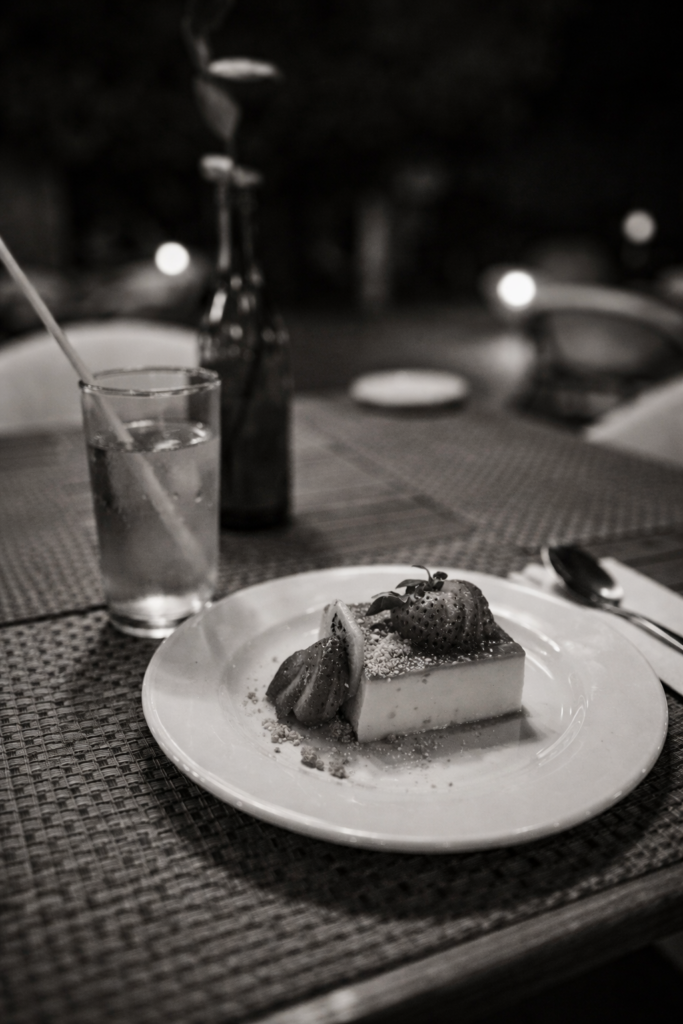
I took this photograph during a quiet evening in Loreto. A small dessert sat before me on a woven table, lit by the soft glow of fading light. In the distance, blurred lights hovered at the edge of the frame. I was alone, and I was paying attention.
In black and white, the scene becomes something other than a record of a meal. The smooth surface of the custard, the texture of the woven placemat, the condensation gathering on the glass beside it. These details emerge slowly, asking for a different kind of looking. The image is not about the dessert. It is about the act of noticing.
I made this photograph during a moment of pause. After long stretches of exhaustion and academic overextension, eating alone felt like an act of recovery. Trauma often narrows sensation. It teaches the body to move quickly, to defer pleasure, to postpone rest until conditions improve. But conditions rarely improve on their own. Sometimes care must be claimed in ordinary moments, without waiting for permission.
Sweetness became a form of data that evening. The cool texture of the custard, the weight of the spoon, the ambient hum of a place winding down. These sensations returned me to my body in ways that spreadsheets and deadlines cannot. I photographed the moment because I wanted to remember that nourishment does not require justification. It simply requires presence.
The black and white aesthetic removes the seduction of colour and draws attention to contrast, shadow, and form. The dessert becomes both object and stillness. It speaks to slowness, to tending, to the quiet ethics of caring for oneself without apology. In my broader practice, images like this function as sites of reflection, where everyday encounters with food, light, and place become invitations to notice what sustains us when we are willing to stay long enough to receive it.