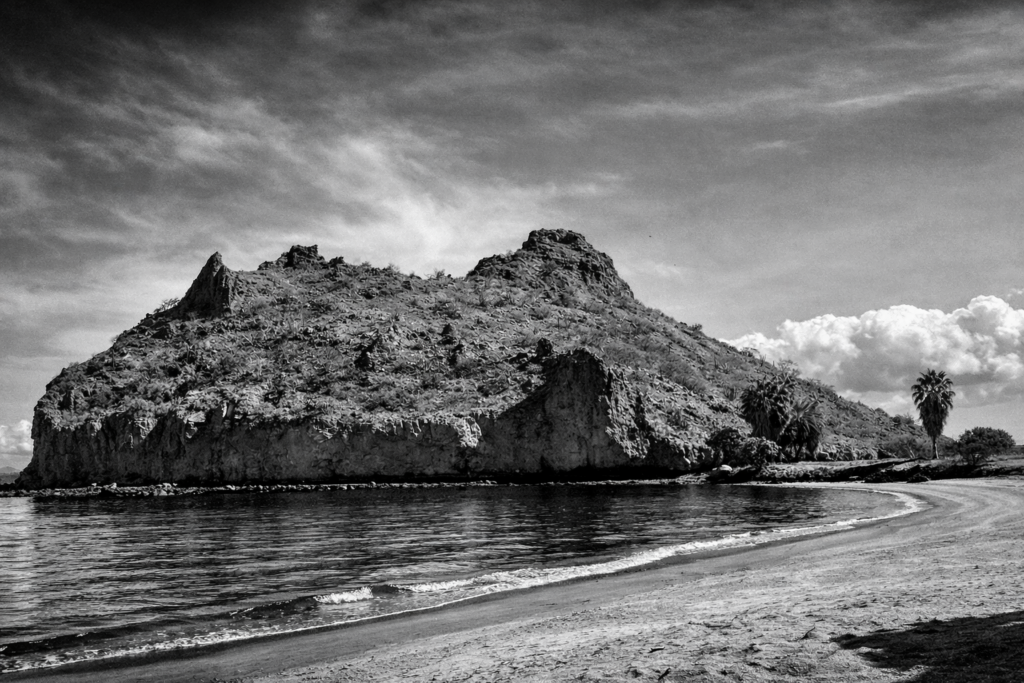
I took this photograph along the shoreline in Loreto, where volcanic rock meets the Sea of Cortez. The mountain rises in the distance, ancient and unhurried. The water holds still, reflecting sky and stone in soft gradients. Thin bands of cloud stretch across the frame, carrying the only visible movement.
In black and white, the landscape becomes a study in patience. Colour would have distracted from what the image actually holds: texture, erosion, the slow accumulation of time. The rocks in the foreground are rough and pocked, shaped by salt and tide. The water smooths everything it touches. The mountain watches without commentary.
I was walking alone when I made this photograph, listening to the rhythm of small waves folding against stone. The land here carries memory without explanation. It does not narrate. It does not instruct. It simply holds what has passed through it and continues to hold what arrives.
Trauma studies often speak of landscapes as witnesses. This place felt like that to me. A quiet witness, holding stories far older than mine, offering neither resolution nor reassurance, only presence. I did not come to the shoreline looking for answers. I came because I needed to stand at the edge of something larger than my own fatigue.
The shoreline is a threshold. A place between solidity and movement, between what remains and what recedes. I am drawn to edges like this, spaces where categories soften and boundaries become permeable. The photograph does not seek to speak over the land. It attends to what endures and what quietly holds, asking only that I stay long enough to notice.
In my broader practice, images like this become sites of reflection. They document how place can hold us when we are uncertain, how land can become a relational partner in healing, and how quiet can be its own form of ethics. The sea does not demand anything from me. The mountain does not ask me to explain. They simply remain, and in their remaining, they teach me something about what it means to stay.