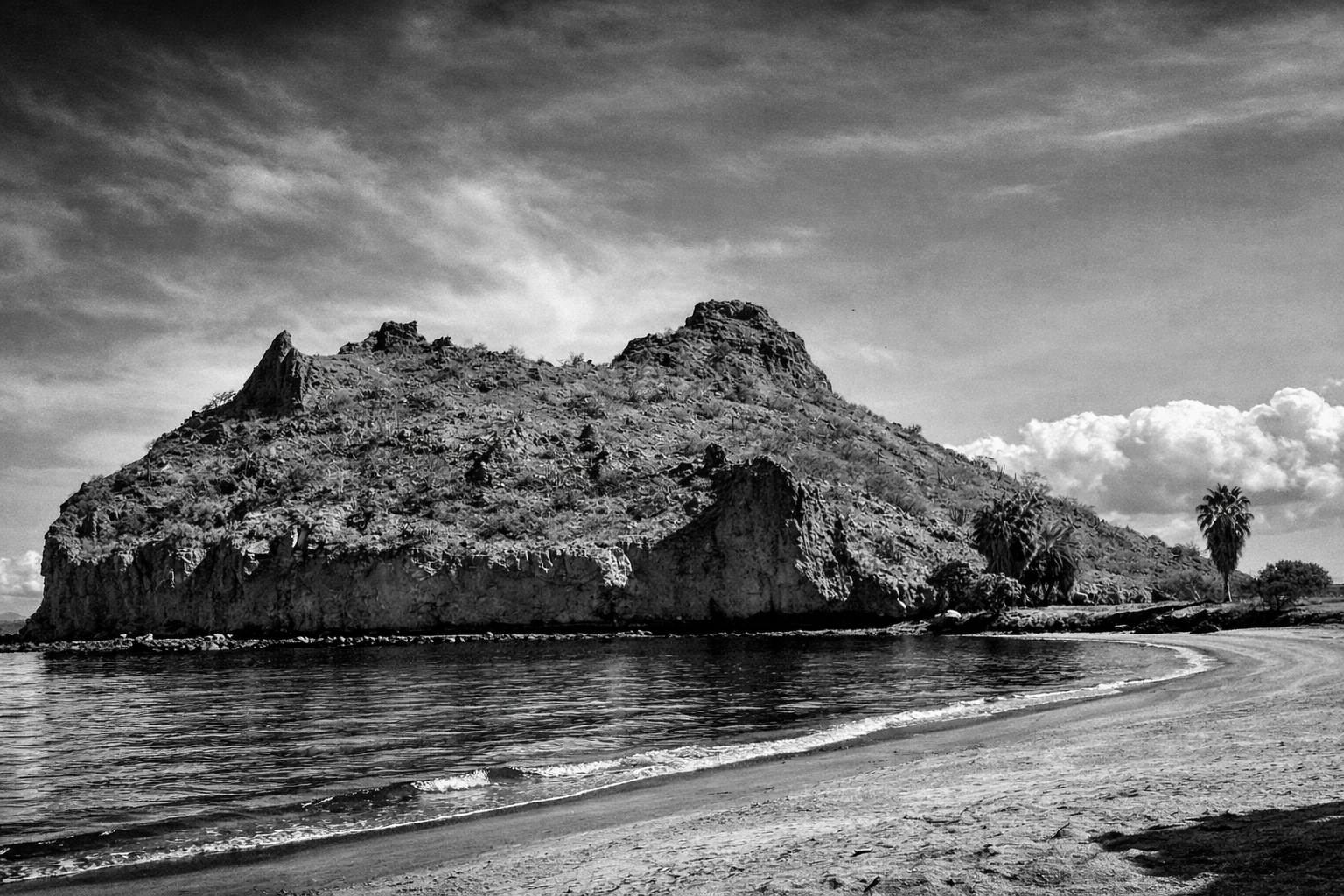
The Shoe That Stayed Behind
Artist Statement

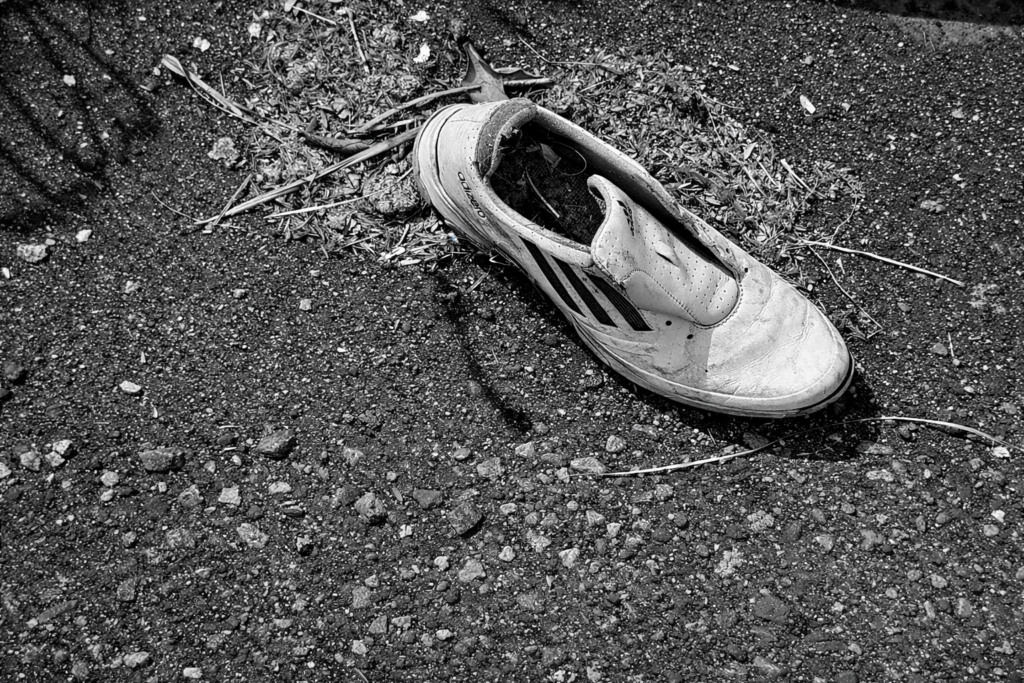
I encountered this shoe alone on the gravel, partially buried, as if the ground had slowly claimed it. It felt like a fragment of a story that would never be fully known. Someone walked here, paused here, or left in haste. The body is absent, yet the trace remains.

The white leather is scuffed and dust-covered, the three stripes still visible beneath the wear. Dried grass and small stones have gathered around it, settling into the space where a foot once pressed. The shoe lies at an angle, neither discarded carelessly nor placed with intention. It simply stayed when someone moved on.

This photograph speaks to residue and disappearance. In my scholarly and personal life, I have often felt that parts of myself were left behind in institutions, contracts, classrooms, and expectations. Like this shoe, those parts remain embedded in place, carrying the imprint of labour, movement, and endurance. The scuffed leather and dust mark time and use, but also abandonment.

I am drawn to objects that hold the shape of bodies no longer present. A shoe is intimate. It conforms to the foot that wore it, bears the weight of steps taken, carries evidence of where that body travelled. To find one alone is to encounter an unfinished sentence. The other shoe exists somewhere, or perhaps it does not. The person who wore this pair continued walking, or perhaps they did not. The image refuses to answer.

In black and white, the shoe becomes elemental. White against dark gravel. Stillness against texture. The reduction strips away distraction and asks only this: What was left here, and why? The ground offers no explanation. It simply holds what remains.

The image becomes an ethical witness to what is discarded and what lingers. It holds a quiet question: Who walked here, and why did this object stay when the person moved on? For me, it reflects the tension between presence and erasure, belonging and disposability, and the ways places keep traces of our movement long after we are gone.

Photo Credit: Amy Tucker, 2026
Ethical Shadows: Overview
Ethical Shadows is a black-and-white art inquiry grounded in place, restraint, and learning from what remains. This blog brings together photography, land, interior space, and reflective practice to explore how presence can be registered without exposure and how meaning can emerge through shadow, surface, and stillness.
This work is shaped by an ethic of witnessing rather than capture. It resists spectacle, urgency, and completion. Instead, it attends to aftermath, trace, and pause—shorelines after use, pavement after passage, tables between acts of work and rest. These are not empty spaces. They are places where memory settles and where learning occurs quietly.
Land is approached here as a teacher rather than a backdrop. Through return, repetition, and careful attention, this inquiry listens to what place holds: erosion, wear, shadow, silence, and what is left behind. These traces offer forms of knowledge that cannot be rushed or resolved. They ask for patience, humility, and care.
Shadow functions as a method in this work. It operates as a boundary, a refusal, and a witness. Shadow allows presence without declaration. It marks where a body was without demanding recognition. In this way, shadow becomes an ethical space—one that honours limits and consent.
Black-and-white is a methodological choice. By reducing distraction, it slows the gaze and allows form, imperfection, and duration to remain visible. Cracks, grain, uneven light, and partial views are not corrected. They are evidence of time, contact, and relation.
Ethical Shadows exists as a practice of learning from place, from absence, and from what persists when attention is sustained. It is an invitation to move slowly, to look carefully, and to allow land and light to teach without insistence.
Purpose
Ethical Shadows is a black-and-white art inquiry grounded in attentiveness to place, restraint, and ethical presence. This blog exists as a space for slow looking, where photography functions as an act of witnessing rather than capture or display. The work explores how land, interior space, and surface can register presence without exposure and history without dramatization.
Rather than focusing on events or subjects, this inquiry attends to aftermath, trace, and pause. It asks what can be learned when we look not for what is new or spectacular, but for what remains. The blog serves as a living archive of that practice.
Artistic Inspiration
My artistic inspiration comes from photographers and artists who approach land and shadow with seriousness, patience, and care.
I am influenced by Awoiska van der Molen, whose landscapes feel watched rather than consumed, and by Mark Ruwedel, whose work documents abandoned and altered landscapes shaped by human trauma and slow violence. Ruwedel’s attention to aftermath and his refusal of spectacle strongly inform my interest in photographing what is left behind rather than what demands attention.
The durational practice of Jem Southam reinforces my commitment to return, repetition, and learning through sustained engagement with place. His work affirms my understanding of land as something that unfolds over time rather than through decisive moments.
Shadow and tonal restraint in my work are informed by Hiroshi Sugimoto, whose work treats light as a measuring instrument, and Michael Kenna, whose elongated shadows quietly mark human intervention without visual excess.
Beyond photography, I am guided by land-based and relational practices such as those of Rebecca Belmore, whose work centres on land, water, and grief through ethical witnessing rather than extraction.
Learning From Land and Place
At the heart of this inquiry is a commitment to learning from land rather than photographing land. I approach the place as a teacher rather than a backdrop. Shorelines, pavement, interior tables, abandoned structures, and transitional spaces hold memory, instruction, and restraint if one is willing to attend carefully.
Learning from land means listening to what is already there: erosion, wear, shadow, residue, and silence. It means acknowledging that land remembers, even when stories are incomplete or unresolved. In this work, the place is not illustrative. It is instructive.
What is left behind marks, shadows, absence, stillness, becomes a form of knowledge. These traces offer lessons about time, loss, continuity, and care that cannot be rushed or fully explained.
Theoretical Framework
This blog is grounded in place-based and trauma-aware frameworks that understand land and space as active participants rather than neutral settings.
My thinking is informed by:
- Yi-Fu Tuan, whose work emphasizes place, attachment, and lived experience
- Edward Casey, who frames place as memory, embodiment, and event
- Ariella Azoulay, whose writing on the ethics of viewing challenges extractive and consumptive modes of seeing
Within this framework, shadow operates as a method rather than an aesthetic. It functions as a boundary, an aftermath, a refusal, and a witness. Black-and-white photography becomes a methodological choice that slows the gaze, reduces distraction, and allows imperfections—cracks, grain, uneven light—to remain visible as evidence of time and contact.
Why This Work, Why Now
I am doing this work to create space for quiet learning. In a culture oriented toward speed, exposure, and productivity, Ethical Shadows resists the pressure to rush. It values patience, return, and attention to what does not announce itself.
This inquiry is about responsibility to land, to memory, and to limits. It asks how one might be present without taking up too much space, how photography might acknowledge what has been without resolving it, and how learning can occur through absence as much as presence.
Ultimately, this blog exists to practise seeing as an ethical act, to learn from what remains, and to honour what is left behind without claiming it.