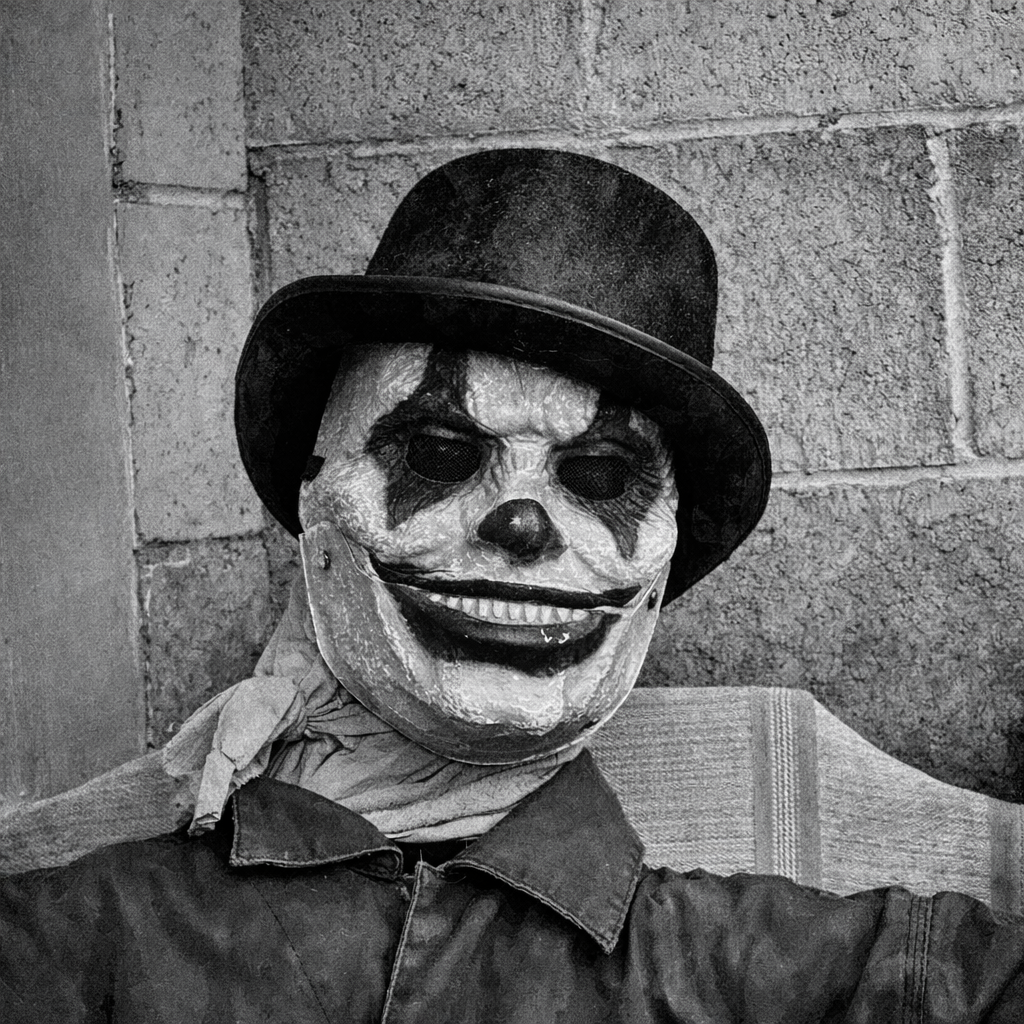
I encountered this figure while walking through the Harrison Antique Store, moving slowly between aisles dense with memory. The space held the quiet weight of objects that had outlived their original owners — furniture, tools, garments, fragments of domestic and working lives. Then, suddenly, this figure appeared. Seated, composed, almost waiting.
The mask drew me first. Its fixed smile, exaggerated and theatrical, carried a tension that felt both performative and hollow. In colour, the red markings were vivid, insistent. Yet I chose to render the image in black and white. The removal of colour shifted the encounter. What once felt loud became contemplative. The grin softened into ambiguity. The figure moved from spectacle into stillness.
I read the image as an artifact of performed identity. Masks conceal, but they also reveal — they show us what a culture fears, what it laughs at, what it exaggerates. Antique stores are repositories of these layered performances. They hold the costumes, tools, and symbols through which people once constructed their lives. This masked figure sits at the intersection of humour and unease, inviting reflection on the personas we inherit, adopt, and eventually discard.
I was struck by the posture — relaxed, almost casual — as though the figure had settled into the role permanently. The longer I stood there, the more it felt less like an object for sale and more like a witness to time passing through the store. A quiet observer of those who come searching for pieces of the past.
Photographing it became an act of pause. A recognition that identity, like antiques, is layered, worn, and often curated for display. The black and white treatment honours this temporal quality. It places the figure outside the immediacy of the present and situates it within a continuum of memory, performance, and cultural storytelling.
Photo Credit: Amy Tucker, Harrison Antique Store, 2026
Leave a Reply